Skatter ingår.
One-of-a-kind Japanese textile art made from antique kimono fabrics. Sustainable artwork for modern interiors, collectors, boutique hotels, and lovers of Japanese aesthetics.
Size
63 x 85 x 5cm
Materials
antique silk, antique paulownia wood
Edition
One-of-a-kind
Story behind the work
This artwork brings together fragments of formal Japanese attire into a structured, almost architectural composition. Created from a vintage kuro-tomesode - the most formal kimono worn by married women - the piece carries the quiet dignity of ceremonial moments into a contemporary visual language.
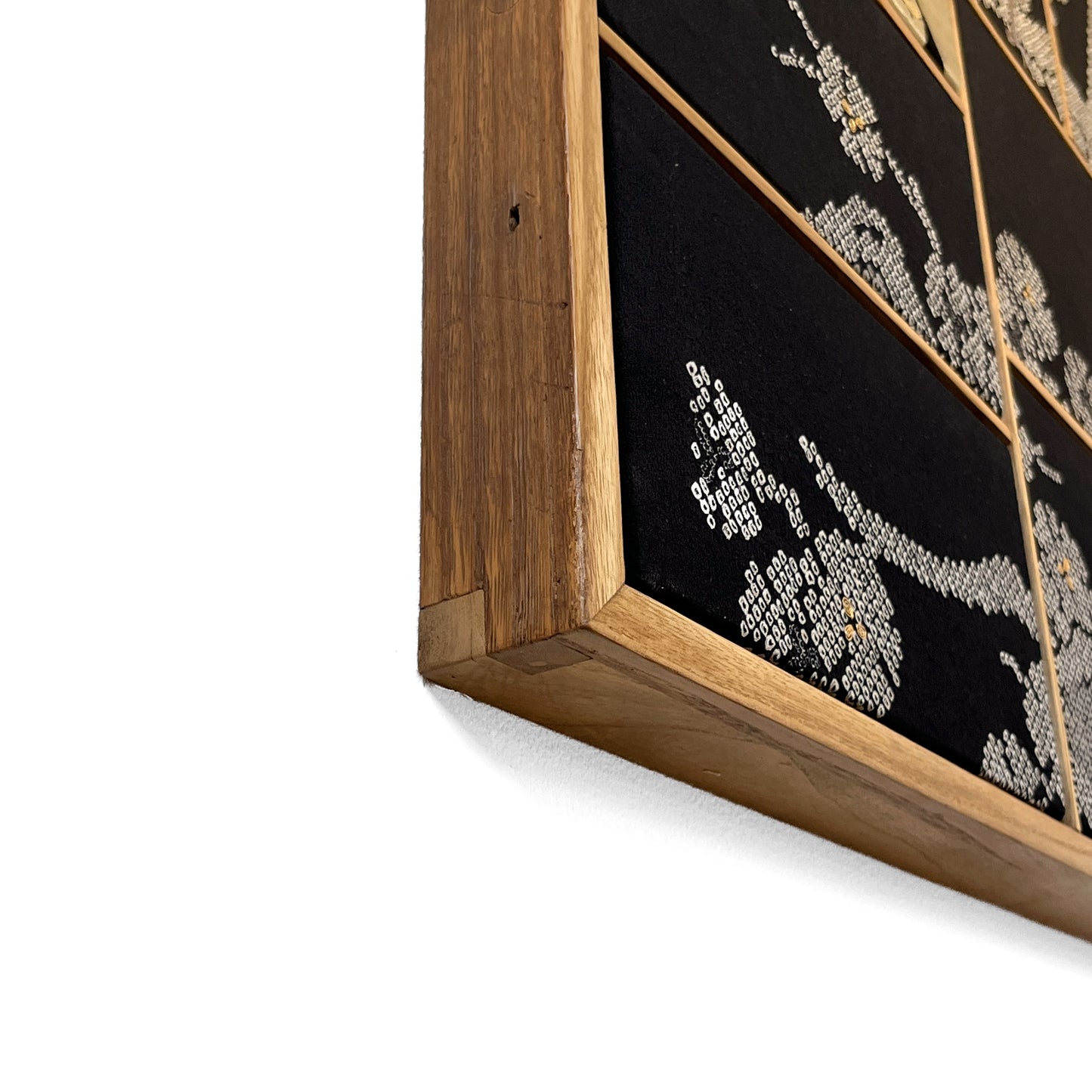
The deep black silk acts as a night-like backdrop, allowing intricate patterns to emerge with clarity and restraint. Executed in traditional shibori dyeing and enhanced with kinkoma embroidery, the motifs unfold across the surface like a refined landscape - delicate yet deliberate.
The composition is divided into multiple sections, resembling a window or a fragmented screen. Each panel reveals a different portion of the textile, guiding the viewer through the work in a slow, contemplative rhythm. Rather than presenting the kimono as a single image, the artwork invites exploration - a sequence of moments rather than one fixed scene.
At the center, a fragment of obi fabric introduces a woven bamboo motif, subtly anchoring the composition. This element acts as a quiet axis, connecting the surrounding patterns and reinforcing the sense of balance within complexity.
Through this layered structure, the work transforms garments once worn for significant life occasions into a timeless visual narrative - preserving their formality while allowing new interpretations to emerge.
Period / Story
Vintage kuro-tomesode kimono, early Showa period (around 1920s–40s), originally belonging to the wife of a politician and worn for formal and celebratory occasions.
Meaning of colors and patterns
The black ground of the kuro-tomesode represents formality, elegance, and timelessness. In Japanese culture, such garments are reserved for the most important ceremonies, carrying a sense of respect and social significance.
The motifs, rendered through shibori and embroidery, evoke elements of nature — flowing forms that suggest plants, seasonal change, and quiet movement. Their restrained palette emphasizes refinement over display.
Bamboo, featured in the central obi fragment, symbolizes resilience, flexibility, and integrity. It bends but does not break, making it a powerful emblem of inner strength.
Touches of gold within the embroidery introduce light into the composition, suggesting moments of celebration and continuity across time.
Together, these elements create a balance between dignity and vitality — a reflection of both social tradition and natural endurance.
Characteristics of the fabric
The artwork combines several traditional Japanese textile techniques.
Shibori dyeing creates softly textured, almost rhythmic patterns through resist-dye methods, giving the fabric a sense of depth and organic variation.
Kinkoma embroidery, a refined couching technique using gold-wrapped threads, adds subtle brilliance and dimensionality. The gold threads catch the light gently, enhancing the quiet luxury of the piece.
The silk itself is of high quality, typical of formal kimono, with a smooth surface and a deep, light-absorbing black that enhances contrast.
The combination of these techniques results in a textile that is both visually rich and materially sophisticated.
Collectors Note
This artwork represents a rare convergence of cultural, historical, and material value.
Kuro-tomesode of this quality, especially with a known social context, are increasingly difficult to source. Their transformation into contemporary art preserves not only the material but also the memory of their original role in significant life events.
The segmented composition adds a conceptual layer, turning a ceremonial garment into a contemplative object - one that invites repeated viewing and discovery.
As with all ikasu works, this piece is entirely unique and cannot be replicated once the original textile is gone.
About the frame
The frame is made from antique kiritansu (桐箪笥) — traditional paulownia wood chests used for storing kimono.
By repurposing this material, the artwork maintains a continuous narrative: textiles once stored within the chest are now presented within it, reimagined. The kiri wood brings warmth, lightness, and historical depth, reinforcing the connection to Japanese craftsmanship and daily life.
Decoration Advice
With its strong contrast and intricate detailing, this artwork works best as a statement piece.
It suits refined interiors — from modern Japandi spaces to more classic environments — where its depth and structure can be fully appreciated. Ideal placements include living rooms, galleries, or entryways where viewers can engage with it up close.
The segmented composition rewards time and attention, revealing new details as light changes throughout the day.
Precaution
All artworks are made from authentic vintage and antique kimono textiles. Due to their age, minor signs of wear may be present. These details are part of the textile’s history and authenticity.
Any noticeable features are documented in the artwork images where applicable.