Inkl. Steuern.
Size
approx. 90cm x 100cm x 5cm
Materials
antique silk, paulownia wood
Story behind the work
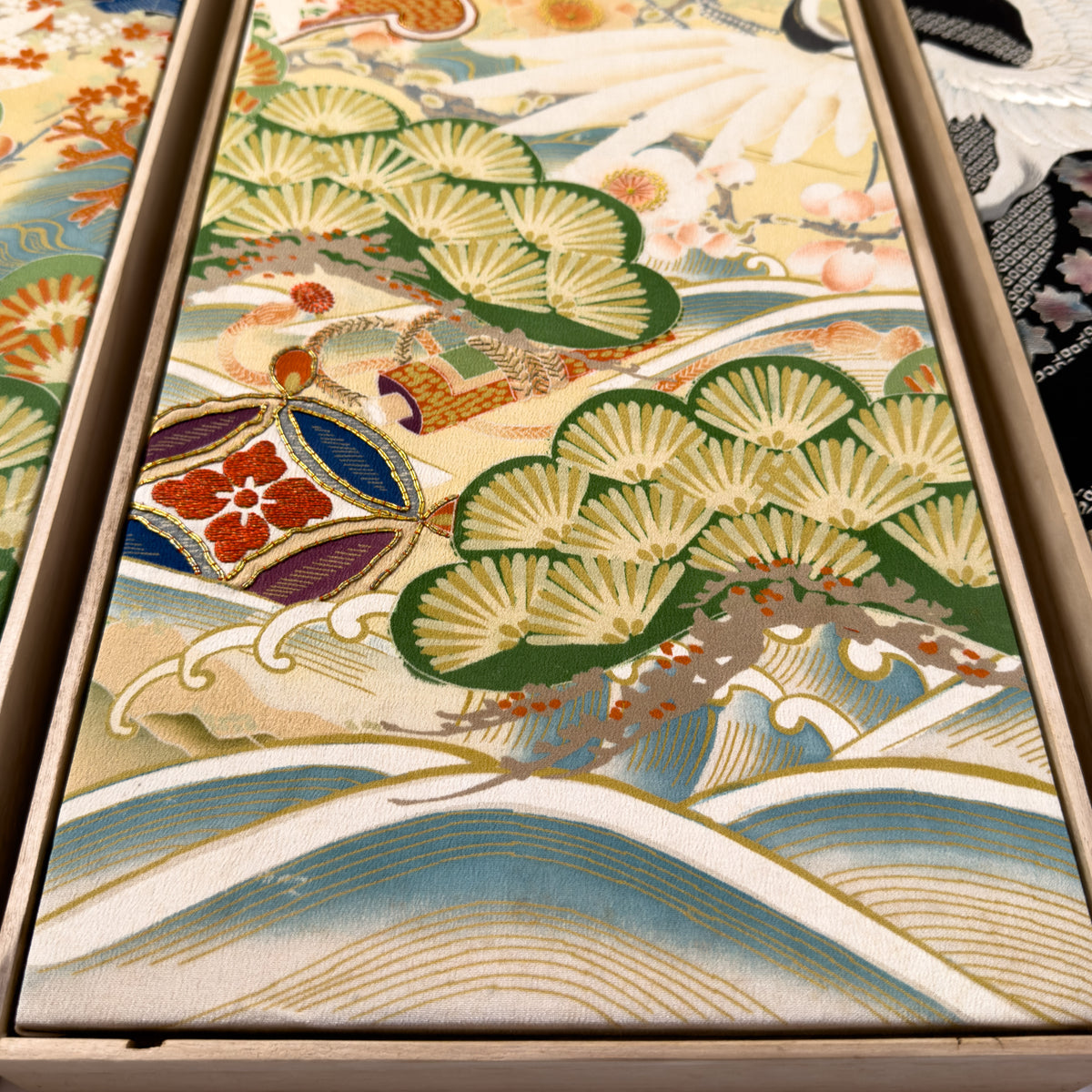
This art work brings together two antique Japanese kimono: a bridal kimono from around 1880, during the Meiji period, and a festive kimono from around 1930, during the early Showa period. I imagine their encounter as a conversation between mother and daughter, exploring what we pass down through generations and how its meaning changes over time.
The frame is made from the paulownia chest in which the kimono were stored. The wood that once sheltered these textiles now holds them in a new form, becoming an integral part of their continuing story.
Period / Story
Meiji (around 1880-ies) and early Showa (around 1930-ies)
Explanation of colors and patterns
The Japanese saying goes, "A crane lives a thousand years, a tortoise lives ten thousand years," making cranes a symbol of longevity.
Cranes are also known for staying with the same partner for their entire lives, which is why they are often used at weddings and other celebrations to symbolize "marital bliss" and the desire for harmony between husband and wife.
Characteristics of the fabric
The kimono fabric brings together three traditional Japanese techniques, each adding a different quality to the composition.
Hand-painted yūzen dyeing gives the design its rich colors and painterly detail. Fine lines of resist paste keep the dyes from spreading, allowing artisans to create intricate patterns with the freedom of a painting.
Nihon shishū, or traditional Japanese embroidery, adds depth and texture through carefully placed stitches. Silk threads catch the light as the viewer moves, giving the motifs a soft, dimensional presence.
Kinkoma embroidery, a gold couching technique, adds luminous accents. Gold-colored threads are laid along the surface of the fabric and secured with small stitches, creating raised lines that trace and enrich the design.
About the frame
Kiritansu - chest-of-drawers for kimono, is traditionally made from paulownia wood, a uniquely Japanese material closely tied to the world of kimonos.
Paulownia wood is known as the lightest wood in Japan, prased for its natural luster, resistance to moisture, and resilience against cracking. Since ancient times, it has been used in crafting furniture, chests, and musical instruments.
During the Edo period, it became customary to store cherished kimonos in paulownia chests, which offered fire resistance and protection from moisture and insects.
Traditionally, when a daughter was born, a paulownia tree would be planted. Upon her marriage, the tree would be cut down, and the wood would be used to craft a chest for her as a wedding gift.
Following the Ansei Earthquake during the late Edo period in 1855, paulownia chests gained popularity due to their ability to withstand fires and even float in water, thereby safeguarding their contents during floods.
I use antique kiritansu that can’t be used as furniture anymore to create basis and frames for my works. It adds them even more authentic atmosphere of traditional wabisabi spirit. Can you feel it?
Decoration Advice
Hanging on a wall requires hooks, tacks or nails. It can also be displayed propped up on an easel. Ideal for a room makeover, housewarming gift, present, or souvenir for a loved one.
Precaution
All the works are made from real kimonos, antiques and vintages. For this reason, the fabric may have traces of long-term use and minor fabric damages. In case there are any scratches or stains, we always add a photo of the area on the item page, so please check before purchasing. Regarding precaution, cancellation and refund policy, please refer to the refund policy in the footer section of the site for information.